
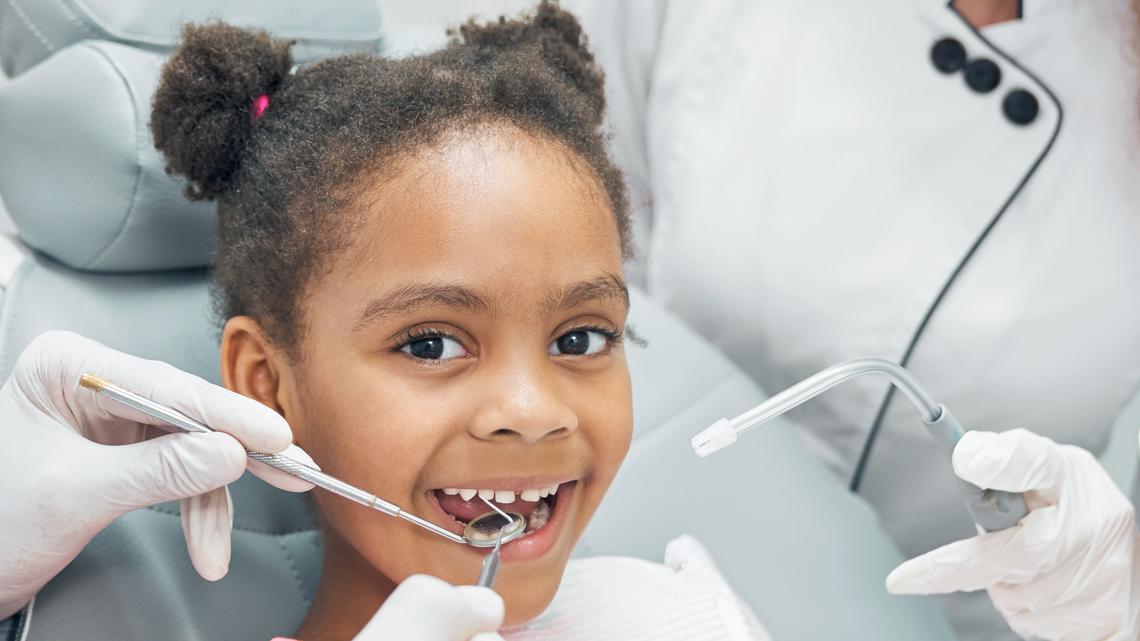
February is National Children’s Dental Health Month, and a pediatric dentist says simple daily habits can protect your child’s smile for life.
CLEVELAND — If you’ve ever wrestled a toothbrush into the hands of a reluctant child, you’re not alone — but the effort is worth it. The habits children develop around dental care in their earliest years can shape their oral health for a lifetime. That message is at the heart of National Children’s Dental Health Month, observed every February, and one pediatric dentist at Akron Children’s says prevention really does start at home.
“We want kids to have a positive start in life to their dental experiences and understand the importance of taking care of their teeth and gums,” said Dr. Brian Martin, a pediatric dentist at Akron Children’s. “Prevention and developing simple, everyday routines and habits will get your kids off to that great start.”
Those routines don’t need to be complicated. Dr. Martin recommends brushing teeth at least twice a day with fluoride toothpaste, cleaning between teeth daily, eating healthy foods while limiting sugary beverages, and visiting the dentist at least twice a year.
Dr. Martin says he has been fielding more questions from parents recently about fluoride — specifically what it is and whether it’s necessary.
“Fluoride is a natural mineral found in water and some foods. It’s also one of the most studied public health tools we have to prevent tooth decay,” he said. “It’s added to many toothpastes, mouthwashes and community water supplies to improve dental health. Decades of high-quality research consistently show that fluoride is safe and effective when used at recommended levels.”
According to Dr. Martin, community water fluoridation and fluoride toothpaste are carefully regulated to provide protection against cavities without causing harm. Fluoride has been used safely for more than 70 years and is endorsed by the American Academy of Pediatrics, the American Dental Association and the Centers for Disease Control and Prevention.
“Kids still benefit from fluoride even if they brush well and eat healthy foods,” said Dr. Martin. “Brushing by itself only removes plaque on the tooth’s surface. Fluoride works by strengthening tooth enamel — the hard outer layer of the tooth — something brushing alone can’t do. It helps repair early damage and makes teeth more resistant to acids that cause cavities. Think of it as a shield that protects teeth throughout the day, not just when your child is brushing.”
Beyond the basics, Dr. Martin offered several additional strategies for parents looking to set their children up for dental success.
He encourages families to swap sugary drinks for water whenever possible. “Be a gatekeeper if you must — just don’t buy it or save it for special occasions,” he said. That includes fruit juices. “It’s natural sugar but still sugar.”
Dr. Martin also advises parents to never put a baby down to sleep with a bottle and to keep toothbrushes in convenient, accessible locations. Many families, he noted, find that placing an extra toothbrush in a downstairs bathroom, near the kitchen sink or tucked in a child’s backpack improves the odds of additional brushing throughout the day.
When it comes to toothpaste, he recommends using a smear about the size of a grain of rice for children under age 3, and a pea-sized amount for those over 3. Children should spit out the excess but avoid rinsing right away so the fluoride can continue working.
And perhaps most importantly, Dr. Martin said, families should keep up with regular dental visits so care can be tailored to meet each child’s individual needs.
link