
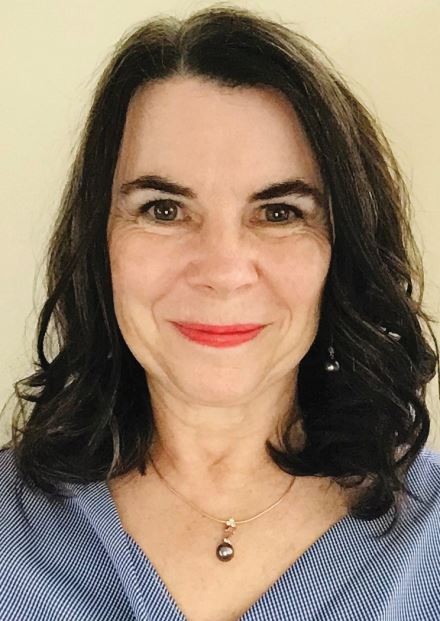
Dental public health is a non-clinical specialty involving the science and art of preventing oral diseases, promoting oral health to the population rather than the individual. We spoke to two consultants in dental public health to find out more about their careers and the importance of the specialty.

Siobhán Grant [SG] is Lead Consultant in Dental Public Health, Healthcare Public Health Team, NHS England (North East & Yorkshire).

Kate Taylor-Weetman [KTW] is a Consultant in Dental Public Health, Healthcare Public Health Directorate, NHS England Midlands.
SG: At school I was torn between history and something medical. I decided that I could always explore history as a hobby but not vice-versa! I liked the idea of dentistry and specialising in the mouth, as it is such an integral part of our lives in eating, speaking, smiling and first impressions.
There were no dentists in my family. I have three siblings who are a teacher, a judge and a doctor, so we have covered a wide range of professions between us.
KTW: None of my family had been to university and I liked most subjects at school but I loved chemistry and French and thought that would be a good choice at uni, but my dad told me that I needed to study to get a proper job and told me to take maths and science A levels – which I did! Following an inspiring talk from Liverpool Dental School staff at an open day I decided to apply for dentistry.
At dental school, did you know which career pathway you intended to follow?
SG: I knew that I wanted to spend time in both general dental practice and hospital but knew very little about dental public health from my time as an undergraduate. The time that I spent in dental practice and as a specialist in oral surgery was valuable in my later career in dental public health. To be a successful Consultant in Dental Public Health, I think that it is vital to have worked with patients from all walks of life and to understand the challenges and responsibilities of the different sectors of dental care.
KTW: I enjoyed most subjects whilst at dental school and in particular the behavioural science modules. I definitely preferred treating older adults rather than children. My elective project involved me undertaking a clinical survey of care home residents and questionnaires with residents and managers. I was shocked when I examined the mouths of residents. Some care home staff weren’t aware that some residents had partial dentures and they clearly hadn’t been removed for a long time. I think this stimulated my interest in looking at things from a slightly more strategic perspective, in order to work out how poor oral health could be prevented in the first place and interventions put in place to support people to have good oral health. During this time I became more conscious of social injustice and inequalities in society which influenced how my career developed.
When did you graduate and how did your career develop from there?
SG: I graduated from Liverpool in 1988. It was a great city to live and study in and I met my husband there, who was a fellow dental student.
I started my career on a voluntary Vocational Training scheme in Leeds with a great female trainer, who introduced me to dental politics, culminating in me being BDA National Chair of Young Dentists. I worked as an associate in general dental practice. I really enjoyed the surgical side and so went to Sheffield and self-funded a Master’s degree in Oral Surgery. Hospital jobs followed, until I became a Staff Grade Oral Surgeon at the Charles Clifford Dental School in Sheffield.
I then applied to be a Specialist Registrar in Dental Public Health in South Yorkshire and subsequently in the North East. In the middle of training, my husband established a specialist orthodontic practice. Inevitably I ended up helping in lots of aspects in the early days, including occasionally acting as an orthodontic nurse to cover staff sickness, calculating payroll, writing practice policies and procedures as well as surgically exposing buried canines. I retained a performer number until relatively recently. I was appointed as a Consultant in Dental Public Health in North Yorkshire in 2001.
KTW: I graduated from Birmingham University in December 1989 and I wanted to get experience in a range of jobs to help me decide which way I wanted my career to develop. The first two years post-graduation were spent working in house officer roles in OMFS units at large hospitals in Birmingham and at Birmingham Dental Hospital. These experiences really helped improve my diagnostic skills and oral surgery skills. I then worked in an NHS dental practice in a deprived area of the city. This gave me a really good insight into the benefits and challenges of life as a GDP which have been of value throughout my career. During this time I also worked as a clinical assistant at Birmingham Dental Hospital in the oral surgery department and supervised dental students learning to extract teeth. I also worked part time in a private dental practice which provided useful insights.
I was able to explore career options with my former tutors and someone suggested I should explore a career in dental public health. Dental Public Health was a very new specialty when I was an undergraduate and I wasn’t aware of the career pathway, but I made contact with consultants in the specialty to better understand the specialty and the role and then decided to aim for a career in dental public health. I would recommend that any dentist interested in a career in dental public health should get as much experience in the different branches of dentistry as possible before embarking on specialty training.
Back then entry to specialist training required you to hold a Fellowship in Dental Surgery – gaining MFDS is soon to be the requirement. I spent most of my spare time revising anatomy, physiology, biochemistry and pathology in order to pass both parts. I had to take the first part several times – those were really tough times – working in dental practice all day then studying all night. I didn’t enjoy failing but it certainly helped me develop my resilience.
Before entering the four-year specialty training programme I travelled for a year during which I undertook a research fellowship at the University of Otago in Dunedin, New Zealand. I was involved in some oral cancer research and developed epidemiological skills undertaking a survey regarding access to dentistry in the North Island. These experiences helped to reinforce my interest in dental public health.
Siobhán, what drew you to dental public health?
It is easy to get life’s Tiggers on board with new ideas but I enjoy engaging the Eeyores, who need more time and encouragement.
SG: What attracted me to my second specialty of dental public health was the opportunity to improve the dental health of populations on a ‘big picture’ level, rather than individuals, with a focus on disadvantaged groups. I love that, although small, the specialty punches above its weight. Dental public health has no power or money but influences via giving independent advice and support to commissioners and Local Authorities to improve oral health. We will never be able to achieve this by treatment alone as it is a downstream action reacting to dental disease once it has occurred. Upstream efforts aim to prevent those problems from happening and to detect them early.
It is easy to get life’s Tiggers on board with new ideas but I enjoy engaging the Eeyores, who need more time and encouragement.
It is still shocking to me that the most common reason for elective hospital admissions for children aged 5-9-years in England is for extractions under general anaesthesia for tooth decay. Dental caries is almost entirely preventable. Decay levels for children and young people living in the most deprived communities are nearly 3.5 times that of those living in the most affluent.
Approximately ten people in the UK die from mouth cancer every day. Deaths from mouth cancer are heavily linked to the stage of diagnosis. People living in the most deprived areas have almost double the incidence rate of head and neck cancer compared to those living in more affluent areas. We know that tobacco, alcohol and Human Papilloma Virus are all risk factors but poorer people are more likely to be diagnosed with head and neck cancer at a late stage.
At a dental public health level, prevention needs to challenge systems that perpetuate disease. Commercial and social determinants of oral health go beyond the change that can be made within the dental surgery and that is where public health can go further in supporting healthy behaviour.
What does your current role involve?
KTW: I provide dental public health leadership and advice across organisations and systems in support of improving oral health and reducing health inequalities. In practice, my role is mainly focussed within Staffordshire and Stoke on Trent working with the NHS dental commissioning team, local clinicians and a range of local authority colleagues with some work undertaken regionally and nationally.
Often, my role requires me to bring together colleagues working in different organisations. The key to making things happen is to win hearts and minds – clinical and non-clinical people working in the public sector want to make things better for their patients and the public. Consultants in Dental Public Health can support them in achieving that by bringing together the evidence, people’s ideas and shaping these to support commissioning a new clinical service or community prevention programme to improve oral health and reduce inequalities in the most effective and efficient way. These programmes need to work for the public and the profession in order to be a success.
The job is very varied, and whilst I have been a consultant for 26 years now, the job has evolved and no week is ever the same, which is why it’s been so enjoyable. Often things crop up unexpectedly and you have to be prepared to provide advice and briefings to help solve problems and issues at short notice. Keeping up to date about dentistry and local politics, and having a network of trusted clinical colleagues you can approach for advice, is vital. I may be inputting into a new service specification, meeting with service providers to discuss the delivery of the commissioned oral health improvement programmes such as supervised toothbrushing and agreeing which areas to target next to help reduced inequalities, reviewing dental service activity data and interpreting it for commissioners, chairing an oral health network meeting, undertaking a service evaluation, reviewing and providing feedback on the quality of specialty training taking place in other parts of the UK.
SG: If you google dental public health, it will give you clever words about it being both a science and an art and a technical overview about the specialty working across the three domains of public health: health improvement, healthcare public health and health protection. Whilst that is a good theoretical answer, it does not give a practical insight into what the role is. Dental public health is a dry fingered specialty that serves the community rather than individual patients. There are comparisons to be made between clinical roles and the specialty with examinations equating to epidemiology; diagnosis to population oral health needs assessment; treatment planning to prioritisation and planning; appropriate care comparing to programme design and implementation; payment to budgets; and review to evaluation.
It is a useful reminder that the skills developed over your practising career are transferable. If our dental community is serious about improving the oral health of the population and reducing oral health inequalities, then dental public health leadership and expertise are a vital part of the mix. It is easy to get life’s Tiggers on board with new ideas but I enjoy engaging the Eeyores, who need more time and encouragement to join too. For me, dental public health leadership is about influencing others, motivated by a vision to improve oral health and dentistry.
Can you summarise what your typical working week looks like?
My role requires me to bring together colleagues working in different organisations. The key to making things happen is to win hearts and minds
SG: These days I tend to be a hybrid worker, doing lots of meetings via Teams but also some face-to-face meetings. I am privileged to work as part of a dental public health specialty with dedicated colleagues with differing skillsets. I am naturally more of a pragmatic ‘big picture’ person and so it is good to work with others who are more data and detail focussed. We complement each other and that is something special.
No two days are similar. I can be providing advice to a practice with a cross-infection incident one day and giving input to the commissioning of multimillion pound dental contracts the next. Sometimes I am asked by a Local Authority to support a Health Scrutiny committee with understanding issues that their population faces with their oral health.
My role requires me to bring together colleagues working in different organisations. The key to making things happen is to win hearts and minds
I carry out oral health needs assessments to look at unmet needs and identify priority vulnerable groups. This then informs levels of disease, expected demand and type of services required in an area. I have been involved with setting up new services such as intermediate oral surgery in primary care and service reviews. I occasionally assess funding requests for high-cost treatments such as prosthetic temporomandibular joint replacements, as well as input to oral health promotion programmes.
I have a two-way link with dental practices in giving advice when needed and seeking input from them. Throughout my Consultant career, I have been co-opted onto my Local Dental Committees and consider this to be vitally important to keeping in touch with the realities of working at the enamel face.
I love that I can draw on my experience as a clinician and running a dental practice to understand the challenges in healthcare and try to find solutions, e.g., incentivising prevention and treatment for high needs patients. Sometimes you cannot wait for a door of opportunity to open, you must put your shoulder to it and give an almighty shove; it is also easier with multiple shoulders shoving.
What has changed in your speciality since you began working in it?
SG: Dental public health was a fairly new specialty in terms of Registrar pathway training when I started. It was very male dominated. It has been heartening to see dental public health now recognised as integral to commissioning matters in terms of leadership and advice.
I cannot remember how many NHS reorganisations I have experienced over the years, including the current abolition of NHS England, but the specialty has always been able to adapt and continue to provide a constant level of experience and impartial support to the partners that we work with. We now work with a larger number of people than ever before across large geographical footprints, including voluntary agencies and we have to be able to adapt a narrative to the audience so that it is understood by all.
Would you recommend DPH as a specialty to others?
SG: I would recommend the specialty that I love to others. It has allowed me some flexibility in terms of raising two children with complex special needs.
When you enjoy what you do, work does not always feel like work. It lets me be the sociable person that I am. I enjoy collaborating closely with people from diverse backgrounds and across different organisations to innovate, within the current contract system. I have also enjoyed trying to embed evidence-based programmes and focus care on those most in need, especially speaking for those who have no voice. Public health is a powerful tool to level the playing field of disparities. It depends on winning over hearts and minds. It is not enough to just have an evidence-based proposal, you must convince people to embed it in practice.
What have been the highlights of your career so far?
KTW: Ever since my earlier exposure to the challenges facing care home residents in terms of maintaining their oral health as their ability to self care reduced, I’ve been committed to addressing that during my career. I’ve learned over the last few decades that sometimes bringing about change can take much longer than you think reasonable – which can be frustrating. Sometimes you just have to play the long game and wait for people, politics or policy to change so you can move forward. The NHS now clearly has a role in preventing disease and locally the NHS dental commissioning team funded a pilot which I led to develop the Care to Smile mouthcare programme for care homes which supports care home staff to support their residents to maintain or even improve their oral health. Local volunteer dentists supported the evaluation of the pilot which evidenced improvements in people’s oral health and quality of life. The programme has now been expanded and funded recurrently to deliver training to mouthcare champions in over 200 care homes so far with ongoing update training and quality assurance. We recently held an awards ceremony to celebrate and acknowledge the hard work of care home staff who had taken responsibility for implementing the Care to Smile programme in their homes. Their commitment to oral health will improve the quality of life and oral health of the vulnerable adults in their care. They were clearly really proud to receive their awards which shows that oral health is everyone’s business.
SG: I have enjoyed my 20-something years as a Consultant in Yorkshire & the Humber. I hope that I have had some positive impact over the years, both on a professional and a personal level. Relationships are vitally important in my role and highlights have been collaborating with partners to find solutions to problems.
I am proud to have worked with a dynamic Local Dental Network Chair and together we piloted an In Practice Prevention scheme that allowed practices to substitute UDAs for prevention, delivered by dental care professionals. I am gratified that this innovative programme has evolved into flexible commissioning which now also incorporates sessions of care targeted at high needs patients and that this model has been adopted in other areas. It feels like a win-win-win for patients, dental practices and oral health.
During the pandemic, I was so proud of my team, who were involved with producing resources and interpretation of guidance, working incredibly long hours. We were the first point of contact for COVID-19 queries for dental teams. I think that almost every private and NHS dental practice in Yorkshire and Humber had contact with one of us. It was humbling to see the Yorkshire & Humber dental profession come together to plan, set up and run the urgent dental care hubs, share PPE and facilitate access to vaccinations. It was a great example of many hands, with one purpose achieving things in time scales that would have been impossible without teamwork.
Can you see a future where there are fewer oral health disparities among different population groups and where everyone has access to dentistry and oral health education in the UK, or where the current situation is improved at least?
SG: I am a pragmatist and think that excellence should not get in the way of good because no oral health system will ever be perfect. I am sometimes reminded of the anecdote about the ‘Cobra Effect’ during the time of the British rule of colonial India. The government wanted to tackle the worrying number of venomous cobra snakes in Delhi. Their strategy was to offer a bounty for every dead cobra. This was initially a successful scheme with many rewards claimed, and the number of cobras started to decrease. Then, enterprising people started breeding cobras to claim the payment. The government became aware and stopped the arrangement. As a result, the cobra breeders set the now worthless snakes free, increasing the cobra population in Delhi to higher levels than ever before. Equally, there are no easy solutions to universal levels of excellent oral health for all.
Where you live should not determine whether you have good or poor oral health. I am gratified to see the importance of community water fluoridation being recognised with the expansion of the scheme in the North East of England and national oral health improvement programmes such as supervised tooth brushing and sugar tax. They reach people regardless of background, language or health literacy. We need a focus on actions that will produce results. As I approach my sell by date, but hopefully not my best before date, the optimist in me aspires that these prevention and oral health improvement schemes will ‘go large’. The best way to predict future oral health is to implement dental public health improvements now.
link