
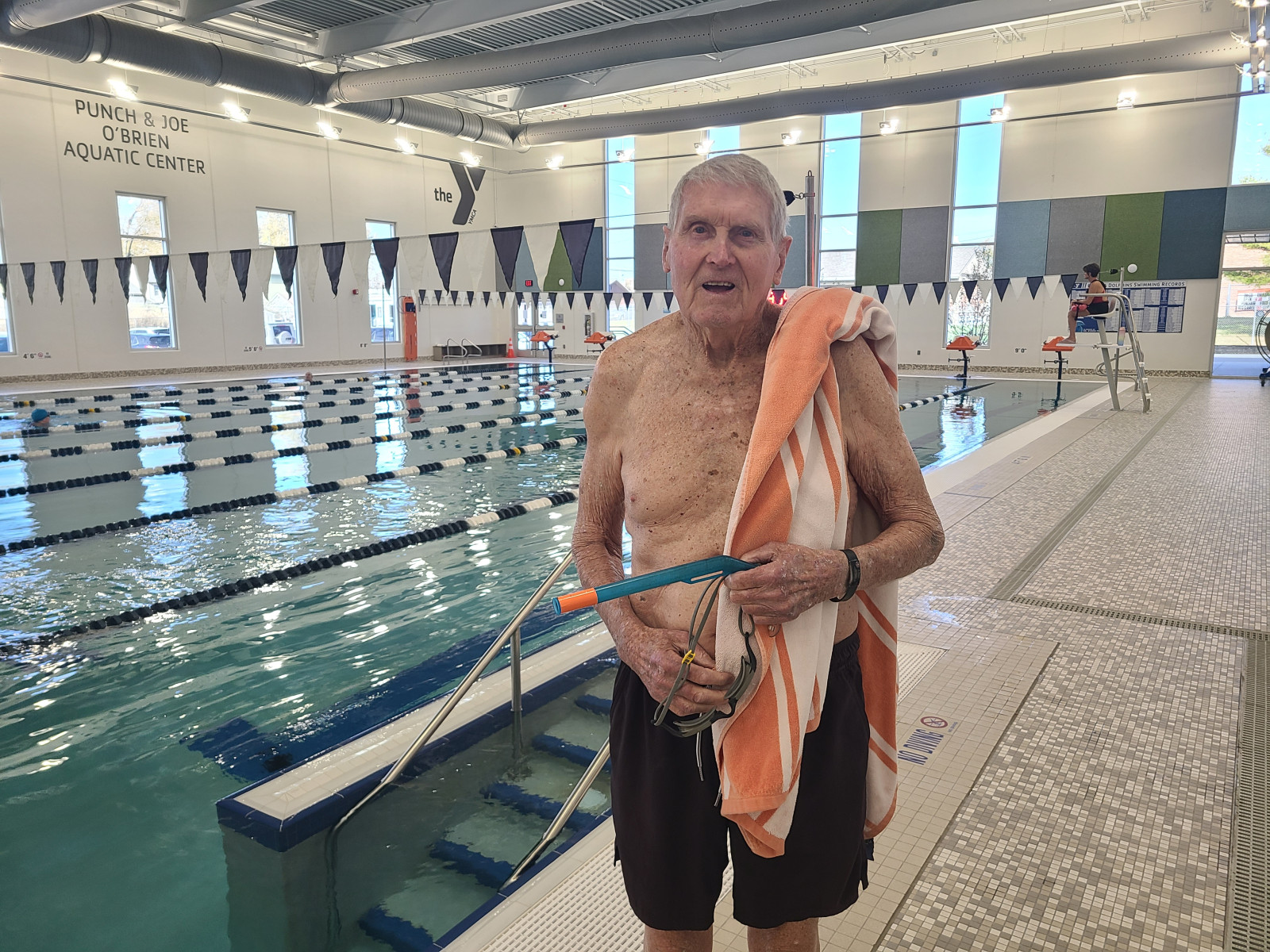
Bob Purcell, swim enthusiast
Bob “Spider” Purcell admits he doesn’t move as fast as he used to. But he’s OK with that. At 96, Purcell is more than content getting in his exercise by swimming laps nearly every morning at the YMCA in Ottawa, Illinois.
“I’m a slow swimmer,” says the Ottawa resident and retired high school teacher. “I just freestyle for a half hour, and that’s it. It keeps me going in the morning, really. I can feel down or not ready to do anything, but I get in that water, and it just peps me up.”
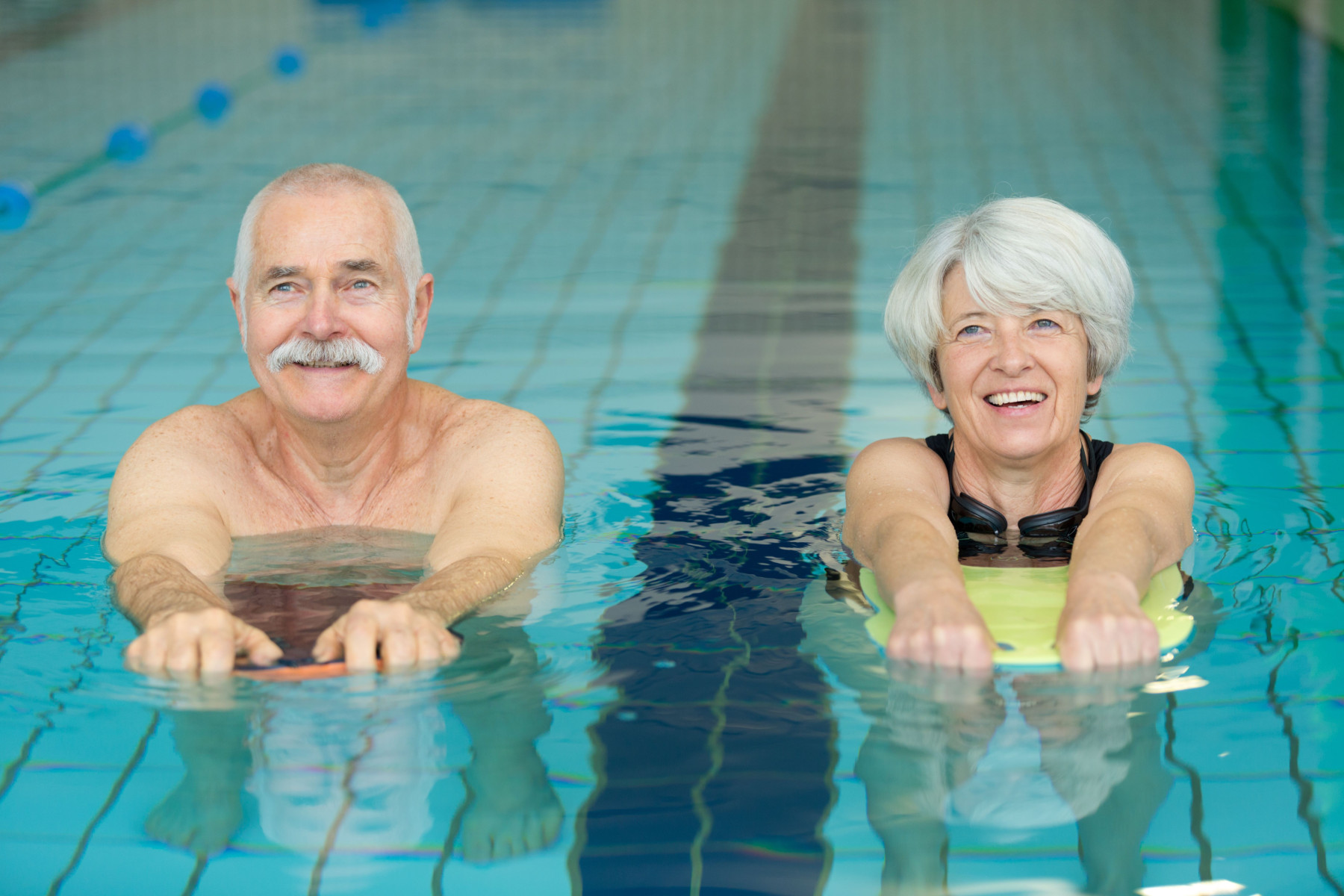
Purcell is not the only senior who gets his exercise in the pool. Experts agree that water exercise is the ideal choice for several reasons.
Travis Swink, DO is a family practice physician at OSF HealthCare. He has seen the benefits of swimming firsthand. When he injured his shoulder, part of his rehab was swimming to help improve his range of motion and keep his joints flexible.
“For my elderly population, I love when they’re out swimming,” he says. “Because it’s less impactful, especially if they’re walking in the pool, it alleviates some of the weight.”
Dr. Swink says there are many reasons to swim. The support from the water can help people overcome painful movement caused by arthritis and other health issues. It can help with weight loss, reduce the risk of heart disease and improve overall endurance. It impacts all major muscle groups – especially the upper body, core and legs.
There’s more. Dr. Swink says it can help with circulation, reduce the impact on the spine, improve balance and reduce falls. It can even help with menopause.
“It increases strength and it increases mobility. When you have more agility, you have a lot better balance,” says Dr. Swink. “So yes, people that are recovering, and you’ll see it with pro athletes when they have ankle injuries, they’re in a pool walking. It’s to increase that flexibility and mobility.”
Purcell, who was tagged “Spider” in high school when a classmate remarked how skinny he was, learned to swim in grade school. But he really dipped his toes in the water when he retired from teaching 40 years ago. Purcell used to walk and kayak but has found doing laps more to his liking.
He says swimming has helped him with overall endurance. Every morning, he drinks a healthy shake before heading off to swim. One day a week, he and his wife, Kathy, volunteer at OSF HealthCare Saint Elizabeth Medical Center.
Purcell says he’s had a couple of minor health issues over the years, and has noticed a loss of muscle mass, but remains healthy to this day. “I just like water,” he says. “It’s really nice to be able to get in it. And it does make me feel good.”
Dr. Swink says Purcell is a great example of how swimming can benefit seniors.
“Not only is he doing something that’s good for his heart, but he’s also doing something that’s releasing some natural endorphins, which is good for his mental health,” he says. “By doing that activity every day, he’s not only helping his physical health, but his mental health. I congratulate him on that.”
And if you don’t have access to a pool, no worries. Dr. Swink suggests using band therapy or a rowing machine that will offer the same type of workout.
Purcell’s advice to other seniors is simply to get moving. No matter what you do.
“I would start with walking and build up where you can walk a couple miles every day,” he says. “I think that’s probably one of the best things an older person could do. And then if you want to swim, and you know how to swim, that will really add to it.”
link